From kindergarten performances to student-led research projects, Inspire Academy shows what inquiry-based learning and charter school flexibility can look like in action.


Inspire Academy in Muncie was in full preparation mode during a visit in May. Teachers were walking students from classroom to classroom on a rotating schedule, giving every grade level a chance to preview what they had been working on before their end-of-year showcase, an evening where students share their learning with families, friends, and the broader Muncie community. The hallways were busy, students were excited, and the work on display gave a clear picture of what the school year had been building toward.
Inspire is a tuition-free public charter school serving kindergarten through 8th grade on Muncie's east side, built around the idea that students learn best when they are curious, challenged, and part of a community where they are genuinely known. The showcase is a natural culmination of a year of learning, where student work is celebrated and recognized not just by their teachers but also by the people who support them outside of the classroom.
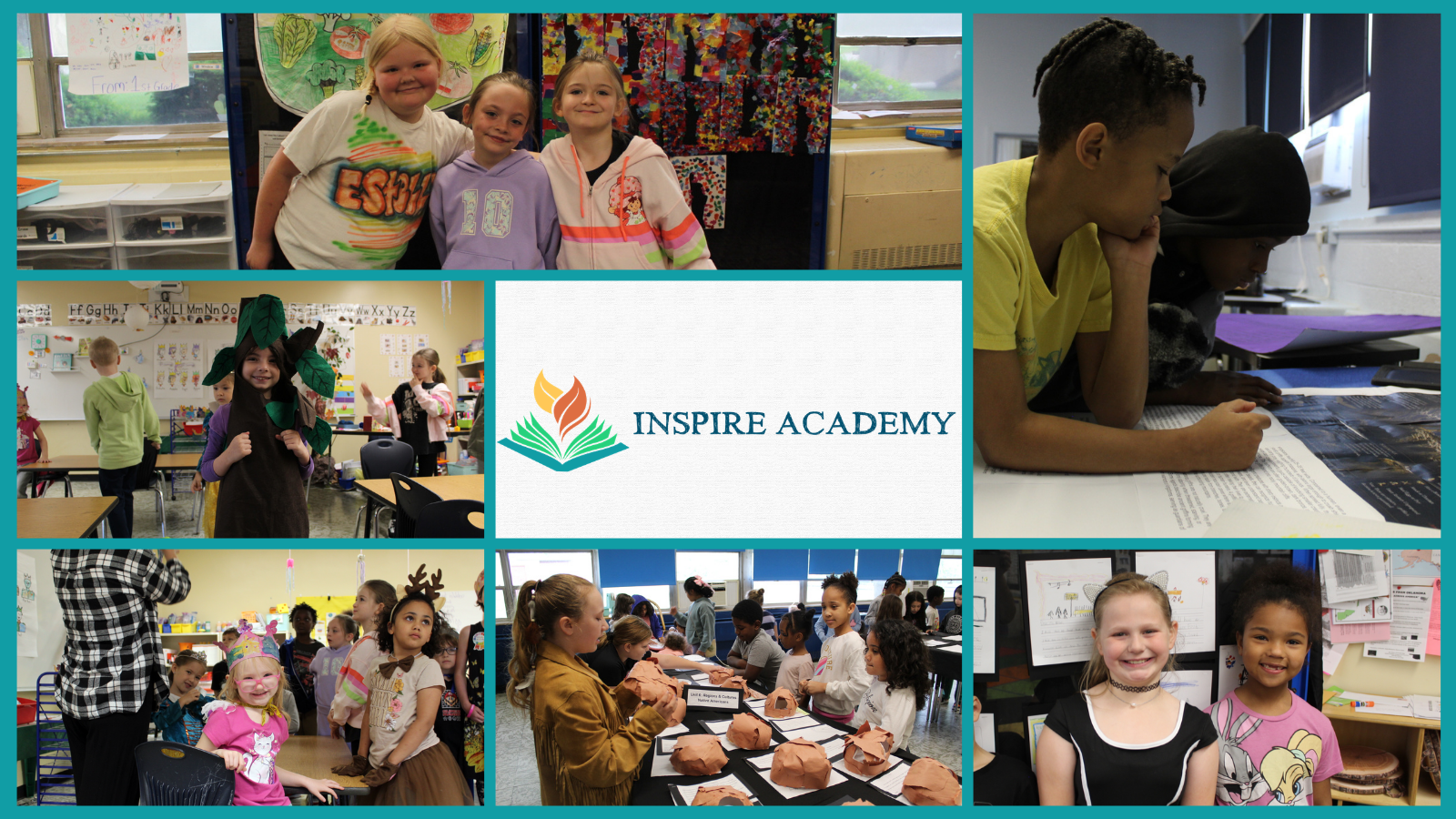
In one classroom, kindergartners were rehearsing a storybook play for their older classmates. They were proud of their costumes, proud of their parts, and working hard to demonstrate courage and confidence by performing in front of their peers, teachers, and older students. For five- and six-year-olds, performing in front of older students takes confidence that has to be built carefully over time, and it was clear this group had been working toward that moment.
Those skills will not show up on a state assessment, but they will show up in a job interview, a student council speech, raising your hand when you need help, or any moment that asks a student to stand up and share their own ideas. Building that foundation in kindergarten is not a small thing, and Inspire students were already putting those skills to the test.
Older students had spent weeks researching Indigenous peoples from the region, learning about their cultures, histories, and ways of life. They built detailed models of Indigenous homes and prepared reports to accompany them. What stood out was how they shared their work, turning to younger students and walking them through what they had learned, stepping into the role of teacher themselves.
There is something that sticks when a child has to explain something well enough for someone else to understand it. At Inspire, students were not just completing an assignment. THey were practicing ownership, communication, and the kind of deeper understanding that comes from teaching others.
In another classroom, students were putting their graphing skills to work in a practical way, asking visitors to vote on their favorite foods and tracking the results in real time. It was a small thing, but it connected an abstract skill to something immediate and interactive, which is very much in line with how Inspire approaches learning across the board. Students were not just learning how to create a graph. They were using data to ask a question, gather responses, and make sense of the results.
An art class had taken on one of the more memorable projects of the day. Students created to-scale drawings of mythical creatures and cryptids, using graph paper to keep proportions accurate, and paired each drawing with a research report on the creature's mythology and cultural origins. It was a natural blend of art, math, and research writing, the kind of cross-disciplinary project that Inspire's inquiry-based model is designed to make room for.
One student offered a detail that stayed with me. "We all made squares for our class quilt project called a moral quilt," he said, "about the lessons that we’ve learned from stories this year." It was a small window into something Inspire works at deliberately, building students who see themselves as part of something larger and who understand that how you show up for others is part of the education too. Quilt squares shared lessons like “Think before you act” and “Do good things for others and good things will happen to you”.
Inspire is a small school by design. With an average class size of 19 and 19 acres that include an outdoor learning lab, there is room to know students well and space to let learning happen outside four walls. The school brings in community experts and takes students into the field regularly because Inspire believes the real world is part of the curriculum and the community should be part of the classroom, too.
That philosophy came through clearly in the showcase work. Students presenting to real audiences, teaching younger classmates, tracking live data, connecting art with math and research, and sharing work they are genuinely proud of. None of it felt accidental. It reflected a school that has thought carefully about what learning should feel like, not just what it should produce.
In that way, Inspire offers a clear example of what charter school flexibility actually looks like in practice. The flexibility is not abstract or theoretical. It shows up in how teachers design learning, how students demonstrate what they know, and how families and community members are invited to see that learning in action. At Inspire, students are not just preparing for a showcase. They are practicing how to explain, create, lead, and belong, and those skills will matter long after the school year ends.
.png)
.png)